
Documentary project
My Life Through Your Eyes
ROLE
UX Researcher
Duration
6 months
methods
Semi-structured interviews
Contextual inquiry
Stakeholder analysis
This project began with Mariam, who wanted to share her family's experience raising a neurodivergent child in a society that often misunderstands or ignores their reality.
Research Question
How can we create public understanding and empathy around autism by centering lived family experiences alongside expert clinical and educational perspectives?
Phase 1:
Foundational Research
I began with no background knowledge of autism spectrum disorder. I have a cousin with Down Syndrome, and I've watched people be scared of her, ignore her, or simply not pay attention. I knew this project required more than good intentions; it required deep understanding.
I spent several weeks conducting secondary research: reading literature on ASD, reviewing existing public education materials, and analyzing other autism awareness initiatives to identify what had been covered and what gaps remained in public understanding.
Key questions I needed to answer:
What challenges do people on the autism spectrum face in daily life?
What support systems currently exist?
What's missing from public discourse?
Phase 2:
Strategic Participant Recruitment
To build a complete picture, I needed diverse perspectives beyond the family. I strategically recruited participants who could speak to different aspects of autism support:
Psychiatrists — Clinical diagnosis and medical understanding.
Educators — Classroom adaptation strategies and educational challenges.
Equine therapists — Alternative therapeutic approaches and sensory regulation.
Artists — Creative expression as communication for neurodivergent individuals.
Through Víctor's school and existing networks, I gained access to these experts. Each participant was chosen to provide a specific lens on how autism affects daily life and what support systems exist or should exist.
Phase 3:
Ethical Protocol & Informed Consent
Working with vulnerable populations requires rigorous ethical standards. Before any data collection, I established clear protocols:
Written consent forms for all participants explaining project purpose, data usage, and publication plans.
Boundary-setting conversations with Víctor's family about what aspects of their life they were comfortable sharing.
Right to withdraw, clearly communicated, participants could pause or stop at any time.
Child protection considerations — when the school director informed us that some children in Víctor's classroom had higher support needs and couldn't be present during observation, we immediately adjusted our approach.
Building trust wasn't just ethical; it was methodological. Authentic insights only emerge when participants feel safe and respected.
Phase 4:
Data Collection & Methodological Adaptation
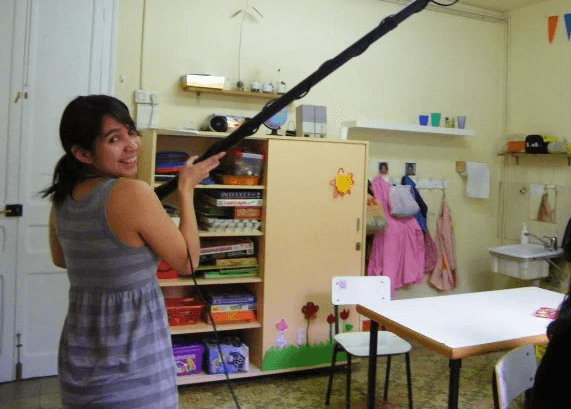
I conducted semi-structured interviews with each expert stakeholder and spent time observing Víctor's daily routines with his family. The restriction on observing other children presented a methodological challenge: How do we capture Víctor's school experience without compromising classmates' privacy?
Research constraints force creative problem-solving. We adapted our observational methods:
Close observation of hands-on activities
Environmental documentation without identifying other children
Careful framing that conveyed classroom atmosphere while maintaining privacy
Focus on teacher-student interactions with Víctor specifically
This taught me that fieldwork rarely goes as planned. The best research comes from adapting methods while maintaining ethical standards.
Phase 5:
Analysis & Synthesis
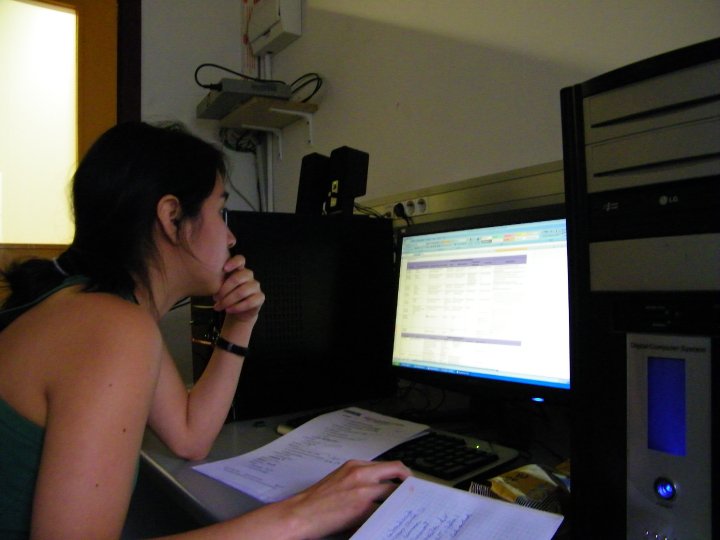
After collecting hours of interview transcripts, observational notes, and family interactions, I faced the synthesis challenge: What patterns were emerging? What story needed to be told?
Core insight: Public misunderstanding of autism stems not from malice but from lack of exposure. People fear or dismiss what they don't understand. Once they see that autism is a different way of perceiving the world, not a broken way, empathy becomes possible.
Secondary insights:
Expert voices provide the necessary clinical context that personal stories alone cannot convey.
Educational systems want to support neurodivergent students but lack adequate resources and training.
Family advocacy is exhausting and often invisible.
Alternative therapies (like equine therapy) address sensory needs that traditional approaches miss.
Primary output:
25-minute educational video synthesizing family narrative with expert insights.
Distribution:
Published on YouTube as a public educational resource, shared with autism advocacy organizations and educational institutions.
Outcomes:
Used by schools and associations for autism awareness training.
Positive audience feedback citing the combination of personal narrative and expert context as particularly effective.
Viewers specifically noted they gained understanding of autism they didn't have before.
Academic recognition for research rigor and ethical approach.
What made it work:
The integration of intimate family moments with credible expert analysis gave audiences both emotional connection and intellectual framework. People didn't just feel sympathy; they gained a genuine understanding.
On research design:
Strategic stakeholder selection is critical—who you talk to shapes what you can learn.
Constraints force methodological creativity that often leads to better research.
Ethical boundaries aren't limitations; they're what make research trustworthy.
On impact:
Research creates value when it makes invisible experiences visible.
Synthesis matters—what you choose to highlight shapes whether people understand or just consume information.
Sometimes the act of documenting and sharing is itself an intervention.